
### Blog Post:
Portable water filter hiking is now a standard for most serious hikers and backpackers in the US due to rising awareness around waterborne illness, improved filter tech, and growing support from trail communities. But how do you pick the best one, avoid costly mistakes, and realize the true limitations—especially if you’re thinking of a long trek?
Key Takeaways
- Over 90% of US long-trail hikers use portable water filters, with squeeze filters now dominating the category.
- Clogging, freeze risk, and soft flask durability are the leading pain points—maintenance and careful filter handling are essential.
- Lab data shows both filters and UV purifiers are effective against bacteria and protozoa but have limitations (especially with viruses and heavy metals) that many guides underexplore.
- 1. What Are Portable Water Filters for Hiking (and Why Are They Essential)?
- 2. How to Use a Portable Water Filter Hiking System: Step-by-Step
- 3. Real-World Analysis: Pitfalls, Field Tests, and Comparison Table
- 4. Conclusion: The Bottom Line on Portable Water Filter Hiking
- 5. FAQ
What Are Portable Water Filters for Hiking (and Why Are They Essential)?
If you hike anywhere that you can’t trust the water supply, a portable water filter hiking system is your first line of defense against common waterborne diseases like giardia or E. coli. With >90% of US long-distance hikers (see detailed trail surveys) treating their water—overwhelmingly using hollow-fiber “squeeze” filters—it’s not just a convenience, it’s trail risk management.
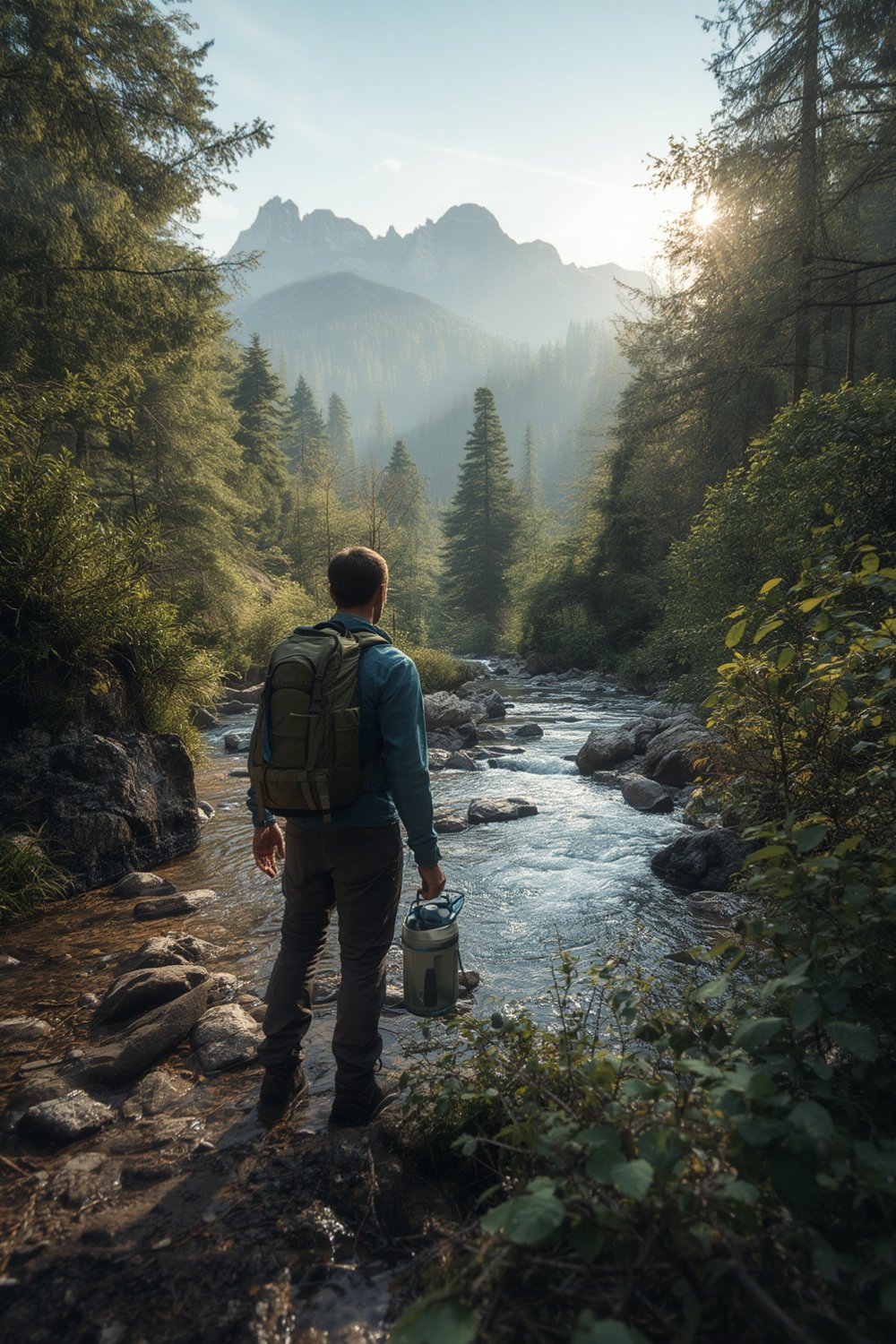
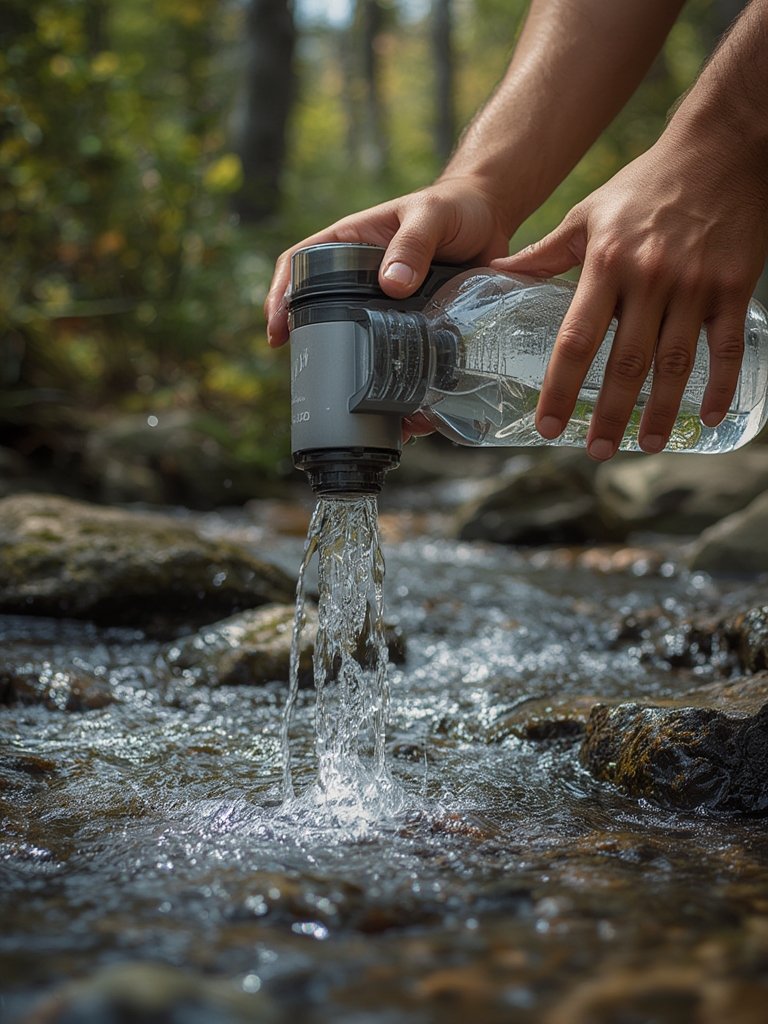
Portable filters physically remove protozoa (like giardia and cryptosporidium) as well as bacteria, by forcing water through tiny membrane pores (as small as 0.1 micron). Most products, like the Sawyer Squeeze or Katadyn BeFree, are lightweight and easy to use, screwing directly onto soft bottles or acting as inline units for gravity/water bottles. UV purifiers, like the SteriPEN, kill most pathogens using light, but don’t remove them physically.
Unlike boiling, filters don’t require fuel—key for multi-day trekking. But not all filters are equal, and “real-world” problems like clogging, flow rate drops, and freeze damage are far more common than marketing admits.
For comparison, check out our best lightweight hiking backpack guide for more tips on assembling an ultralight kit built for actual trail conditions.
How to Use a Portable Water Filter Hiking System: Step-by-Step
- Choose the right filter: For solo and ultralight hiking, a squeeze filter like the Sawyer Squeeze or Katadyn BeFree is most common. For group travel, consider a gravity system (e.g., Platypus GravityWorks) for higher throughput.
- Check filter integrity: Before every trip, test flow rate at home. If the filter has been exposed to freezing, consider it compromised—even if it looks normal.
- Pre-filter if water is silty: Use a bandana or coffee filter to screen out large particles before using your main filter. This cuts down on clogging—a notorious problem with all leading models.
- Fill the source (dirty) reservoir or bottle: Don’t over-tighten—soft bags (especially Katadyn BeFree) are prone to sealing leaks and punctures at the threads or seams.
- Attach the filter and squeeze (or let gravity work): Squeezer-style? Press gently and steadily to avoid damaging the bag. Gravity setup? Hang at a good height difference for best flow.
- Regularly backflush your squeeze filter (if supported): For Sawyer and Platypus, carry the syringe or plastic bottle cap for backflushing every 2–3 liters or daily. Katadyn BeFree only allows shaking/swishing—not true backflushing.
- Store safely overnight: If temperatures drop near freezing, sleep with the filter in a plastic bag inside your sleeping bag. A frozen filter = useless (and potentially dangerous).
- Monitor for flow rate decline: If your filter slows to a trickle and backflushing doesn’t fix it, plan to replace it—or at least be ready to pre-filter all water until you can.
- Disinfect when in doubt: If viral contamination is possible (international travel, downstream-of-human/animal sources), add iodine, chlorine dioxide, or UV treatment after filtering. Microfilters alone don’t remove viruses.
- Budget for replacement parts: Expect to replace soft bottles/flasks or bags every 1–2 seasons for regular hikers.
For other trail efficiency hacks and gear combo tips, check out our practical review of insulated hiking water bottles—an ideal pairing for safe filtered water all day.
Real-World Analysis: Pitfalls, Field Tests, and Comparison Table
Even the best portable water filter hiking setups require careful use and can’t solve every trail problem. Here’s what the research and thousands of honest user reviews reveal.
Top 5 Pain Points from the Field
- Clogging and Flow Rate Drops: Silt or organic-rich water causes rapid clogging, especially on Katadyn BeFree (sometimes within first 5 days). Sawyer Squeeze requires aggressive, regular backflushing. Platypus QuickDraw performance is variable—some report painfully slow flows out of the box. (Source)
- Freeze Damage Risk: Any freezing event can destroy filter fibers, risking “unfiltered” water passing through. Most mainstream advice skims over this. Always bring the filter into your sleeping bag if low temps are expected.
- Soft Flask Failure: Katadyn BeFree flasks are notoriously fragile—leakage and tearing around collars is common in long-term use. Platypus reservoirs sometimes snap at threads. Be ready to replace soft components annually.
- Limited Cleaning Options: Katadyn BeFree doesn’t allow true backflushing; once clogged, it’s difficult to restore flow. Many user complaints arise from lack of warning (“it’s dead, and there’s no warning light”).
- Virus/Heavy Metal Limitations: Standard squeeze filters (Sawyer, BeFree, QuickDraw) do not remove viruses or dissolved metals. For full viral protection, you need UV (like the SteriPEN) or chemical disinfection as a secondary step.
Lab-Tested Removal Rates: Filters vs UV purifiers
| Technology | Removes Bacteria? | Removes Protozoa? | Removes Viruses? | Removes Heavy Metals? | Main Limitations |
|---|---|---|---|---|---|
| Squeeze Filter (e.g., Sawyer, BeFree) | Yes (≥6-log: 99.9999%) | Yes (≥3-log: 99.9%) | No | No | Clogs in silty water/freezing destroys integrity |
| UV Purifier (SteriPEN) | Yes (≥4-log: 99.99%) | Yes (99.9–99.99%) | Yes (≥4-log: 99.99%) | No | Ineffective in turbid water/needs batteries/doesn’t remove particles |
| Gravity Filters (e.g., Platypus GravityWorks) | Yes (NSF/EPA certified) | Yes | No (unless labeled “purifier”) | No | Heavier/less portable for solo use |
Comparing Price and Ongoing Costs (2024 Market Data)
- Sawyer Squeeze: About $45.99 for the core set; expect ~$25–30 for replacement bags every 1–2 years. Often the lowest annual cost for regular hikers. See details
- Katadyn BeFree: $40–45 for the bottle+filter; heavy use means annual cartridge swap is common ($40–45/year).
- Platypus QuickDraw: $39.95 (filter only), $54.95 (filter + 1L bottle)—threads and reservoirs are a weak point for long trips.
- SteriPEN Adventurer (UV): $90–130 upfront, plus $23–33 for batteries every 50 liters of water. Best for international/viral protection, but not the most economical for big-mile hikers. View specs
Performance-to-Weight: Which Is Actually Lightest?
| Model | Approx. Weight (oz) | Typical Flow Rate (L/min) | Durability in Field |
|---|---|---|---|
| Sawyer Squeeze | 2.5–3.7 | ~1.0–1.7 (new) / 0.3 (clogged) | Long life, flow drops with silt |
| LifeStraw Peak Squeeze | 2.9–3.0 | ~1.7 | Consistently positive flow reports |
| Katadyn BeFree | 2.3 | ~2.0 (new), drops rapidly | Quick clogging, fragile flask |
| Platypus GravityWorks (4L) | 11.5 | ~1.75 | Best for groups, not ultralight solo |
| SteriPEN Adventurer | 3.8 | N/A (purifies in 90s/1L) | Needs batteries, clear water only |
For more in-depth guidance on assembling your kit, see our actionable article on lightweight trekking poles and hiking tents for 2 persons for balanced packing.
Conclusion: The Bottom Line on Portable Water Filter Hiking
Today, choosing and maintaining a portable water filter hiking system is non-negotiable on US trails—but it pays to be realistic. Major pain points like clogging, freeze damage, and the risk of viruses or heavy metals are real. Squeeze filters and UV purifiers both work well (backed by CDC and lab tests), but maintenance and filter selection matter much more than marketing suggests. Always know the trade-offs and pack backup treatment for high-risk or international hiking. Ready to upgrade your water game? Compare filters based on your actual use, not just package claims. Then set out with confidence—and don’t forget to review our kit-building guides for recovery and trail comfort.
Don’t wait until you’re thirsty on trail—invest in a portable water filter hiking system, practice your routine before your trip, and always have a backup plan.
FAQ
Do all portable water filters remove viruses?
No. Standard squeeze, pump, or gravity filters remove bacteria and protozoa but not viruses due to their small size. Use chemical or UV treatment in areas with possible viral contamination.
How often should I backflush my hiking water filter?
Backflush after every 2–3 liters in silty water, or at least daily on a thru-hike. This is essential to maintain flow rate and prevent permanent clogging.
What’s the best way to avoid freeze damage to my filter?
Keep your filter with you inside your sleeping bag (in a sealed bag) when overnight temps approach freezing. If you have any doubt it froze, assume it’s compromised and don’t use it for untreated water.
How do I know when to replace my filter?
If the filter flow cannot be restored after thorough backflushing or if the soft flask/bag leaks or fails, replace it. For Katadyn BeFree, rapid flow loss is a common end-of-life indicator. There’s no “warning light”—when in doubt, err on the side of caution.
What are the ongoing costs for portable water filter hiking systems?
Expect $20–50/year for soft flask or bag replacements with squeeze filters; UV systems require $23–33 battery packs every 50 liters. Sawyer Squeeze often has the lowest annual cost if maintained well.
—
[…] hikers also combine app navigation with trail-tested gear like a portable water filter for hiking or hiking food energy bars for maximum safety and efficiency on long […]