
### Blog Post:
Weighted vests for training are rapidly gaining traction with athletes and everyday exercisers thanks to real science-backed benefits, but the reality is more nuanced than most blogs admit. Wondering what’s fact, what’s myth, and how to avoid common mistakes with your next weighted vest workout? Here is the up-to-date, no-nonsense rundown based on 2024 evidence and user experience—so you see better results without risking your joints or wasting money.
Key Takeaways
- Weighted vests for training can boost calorie burn, strength, and functional fitness—but only if you use them with the right exercises and safe loading.
- Comfort, sizing, and joint-safety are major issues many users face, so smart product selection and gradual progress are critical.
- Not all weighted vests are alike: tactical vests, block vests, and weight jackets have distinct pros and cons for different workouts and body shapes.
- 1. What Are Weighted Vests for Training and Why Use Them?
- 2. Step-by-Step: How to Train Safely and Effectively with a Weighted Vest
- 3. Advanced Analysis & Common Pitfalls
- 4. Conclusion
- 5. FAQ
What Are Weighted Vests for Training and Why Use Them?
Weighted vests for training are fitness wearables that let you add external resistance to your body during exercise, walking, or even daily activity. By strapping on extra weight, you force your muscles, heart, and bones to work harder—aiming for strength, power, cardio boosts or even fat loss.

Why do people use weighted vests for training? According to the latest research (Mass General Brigham 2024 report), the main motivations are:
- To make simple movements (such as walking, stair climbing, or pushups) more challenging without advanced machinery.
- To enhance calorie expenditure and cardiovascular demand in short amounts of time—ideal for efficient workouts.
- For specific conditioning—like sprinting, explosive drills, or CrossFit WODs—that mimic real-world load carrying.
- To augment bone loading, balance, or metabolic health (though some benefits here remain debated—see Section 3).
The right weighted vest can be a powerful addition to a home gym regime, stacking well with equipment like the Resistance Band or Pull Up Bar to build a full-body training toolkit. But, as you’ll see, not every vest or workout style is equally effective—or comfortable.
Step-by-Step: How to Train Safely and Effectively with a Weighted Vest
-
Pick the right vest for your body and goals.
- Choose adjustable block-style vests for slow progression, general fitness, and walking (AARP health review).
- Select tactical/plate vests if you do CrossFit, rucking, or want military-style stable loading.
-
Start light—never use more than 10% of your body weight when beginning.
- Add weight in small increments (0.5–2 pounds) using removable blocks (much safer than jumping to max capacity).
- Avoid high-impact moves until your body adapts with bodyweight exercise first.
-
Focus on movements that maximize the benefit and minimize injury risk.
- Walking, stair climbing, squats, pushups, lunges, and static holds (planks, wall sits) are ideal for vest use.
- If you want to run, jog, or jump, double-check your vest’s fit and padding, and ramp up weekly, not daily.
-
Combine vest use with structured exercise for best results.
- Research shows muscle strength, function, and lateral stability all respond when vests are paired with a dedicated program—not from just wearing a vest passively. (2024 clinical synthesis)
-
Monitor for signs of joint stress, discomfort, or poor fit.
- If you feel pain in your back, knees, or shoulders, scale down—not up.
- Ensure the weight is evenly balanced and straps are secure but not constricting.
-
Clean your vest frequently and check for hardware/sweat problems.
- Wipe down after each use, remove weights for washing when possible, and let it fully dry to avoid odor build-up.
- Inspect velcro, seams, and buckles regularly—especially in lower-cost models—to prevent breakage mid-workout.
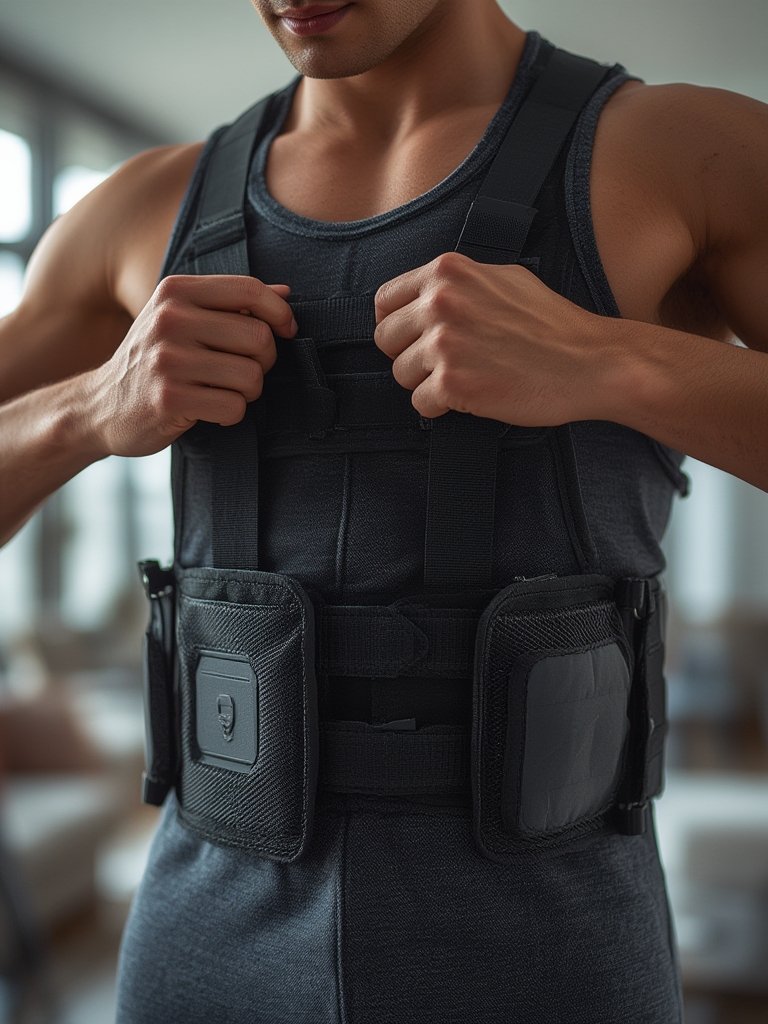
Ready to elevate your home gym setup? Pair your weighted vest use with core tools like a HOTWAVE Push Up Board or Bumper Plates to build a balanced, safe, and effective program.
Advanced Analysis & Common Pitfalls
Despite their growing buzz, weighted vests for training come with several realistic downsides—some barely mentioned in mainstream articles. Here’s what 2024 research and user feedback say to watch out for:
Most Common Issues and Complaints
- Discomfort and Fit: Narrow straps, rough seams, or non-breathable fabrics often make vests uncomfortable—especially for longer workouts. Poor fit leads to chafing, neck/shoulder pain, or the dreaded “bounce” during jogging.
- Joint Stress: Using too much weight or exercising with a poorly-fitted vest can increase the risk of knee, hip, or back pain. Symptoms like shin splints and low-back strain crop up with high-impact moves.
- Heat, Odor, and Cleaning Trouble: Thick neoprene and integrated weights make some vests hot, sweaty, and awkward to clean. Users complain about persistent odors and tedious weight removal for washing.
- Durability Problems: Lower-priced vests often suffer from tears, weak velcro, breaking zippers, and even rust on tactical models.
- Poor Load Distribution: Blocks that rattle, pouches that sag, or plates that shift can feel unbalanced—causing both discomfort and reduced exercise effectiveness.
Tactical vs. Standard Vest Comparison
| Feature | Tactical Training Vest | Standard Strength-Training Vest |
|---|---|---|
| Material | Heavy-duty nylon, reinforced, abrasion-resistant, MOLLE webbing | Neoprene/polyester blends; lighter fabrics (variable durability) |
| Load Type | Steel/ceramic plates on front and back (fixed increments) | Removable blocks, sandbags, or shot pouches (fine increments) |
| Adjustability | Adjustable straps, often more stable for fast/complex movement | Velcro, elastic, or zipper straps—best for quick on/off and varied body shapes |
| Typical Price (2024) | $80-$140 (carrier), $150-$280+ (with plates) | $40-$180 (basic to high quality) |
| Comfort | Stable at high-intensity but can feel rigid or hot | Softer, more padded—better for walking/general use, less bulk |
| Mobility | Low profile, good for multi-plane action | More bulk may restrict arm swing or rotation at heavy loads |
Fitness tip: Check out the Exercise Mat review if you want to minimize joint discomfort from added weight, and consider pairing your vest with a Situp Bar for next-level core routines.
Hidden Pitfalls Most Blogs Miss
- Bone Density: Modern studies show vests alone do not prevent hip bone loss in older adults unless paired with impact exercises (2024 JAMA trial).
- Long-Term Metabolic Impact: While short-term fat loss is possible, only some studies suggest vests help preserve weight loss over 24 months during diet phases—most mainstream blogs ignore this nuance.
- Danger of Overloading: Loads over 10-15% of body weight spike joint forces. Those with back, shoulder, or knee problems should avoid weighted vests, a caveat rarely mentioned.
Conclusion
Weighted vests for training offer real, research-backed enhancements to cardio, strength, and calorie burn—but only if you match the model, weight, and exercise style to your needs. Don’t just toss on any vest and expect magic: prioritize comfort, proper load progression, and exercise selection for safe, effective gains. Ready to step up your fitness routine? Try combining a vest with tools like Core Sliders or a Bumper Plate program for a full-strength challenge.
Get started with weighted vests for training today and experience evidence-based results.
FAQ
Are weighted vests safe for everyone?
No. Weighted vests are not recommended for people with chronic back, shoulder, or knee pain. Always talk to your doctor if you have health concerns before adding additional load to your workouts.
What is the best weight to start with?
Experts suggest starting with no more than 5-10% of your body weight. Increase by small increments of 0.5–2 pounds as your strength and comfort improve. Never rush the progression.
Can I wear a weighted vest all day to burn more calories?
Some studies show increased calorie burn with extended wear, but actual muscle and fitness gains rely on combining the vest with specific exercise. Long-term passive wear is not a shortcut for big results.
Which is better: tactical plate carrier or standard fitness vest?
Tactical vests are stable for high-intensity movement and typical for CrossFit or military-style training. Standard block vests are more comfortable for walking and general conditioning. Your workout style and comfort needs should guide your choice.
Do weighted vests really help with bone health?
Claims about dramatic bone density improvements are overstated. Evidence suggests vests help bone health only when paired with impact or resistance training—not as a standalone solution.
—
[…] and pair your poles with a minimalist pack. If you train for strength or stability, consider a weighted vest for training to build the right muscles before relying on your ultralight poles in steep […]