

Aging in place bathroom modifications have become a top priority for homeowners who want safety, dignity, and independence as they grow older. Planning now can protect your quality of life—and home value—long into the future.
Key Takeaways
- The aging in place bathroom market is booming, with top upgrades like grab bars, zero-threshold showers, and raised toilets delivering proven results.
- Bathroom accessibility remodels can cut ongoing care needs by up to 46% and drive a 68-70% return on investment.
- Detailed cost breakdowns and smart tech features for aging in place bathrooms are still underreported, so careful planning and expert advice matter more than ever.
The Core Concept: What Is an Aging in Place Bathroom and Why Does It Matter?
An aging in place bathroom is designed so seniors and people with changing mobility can safely use their bathroom with minimal or no assistance. The goal: remain in your home comfortably, avoiding the risks and disruption of moving or institutional care.
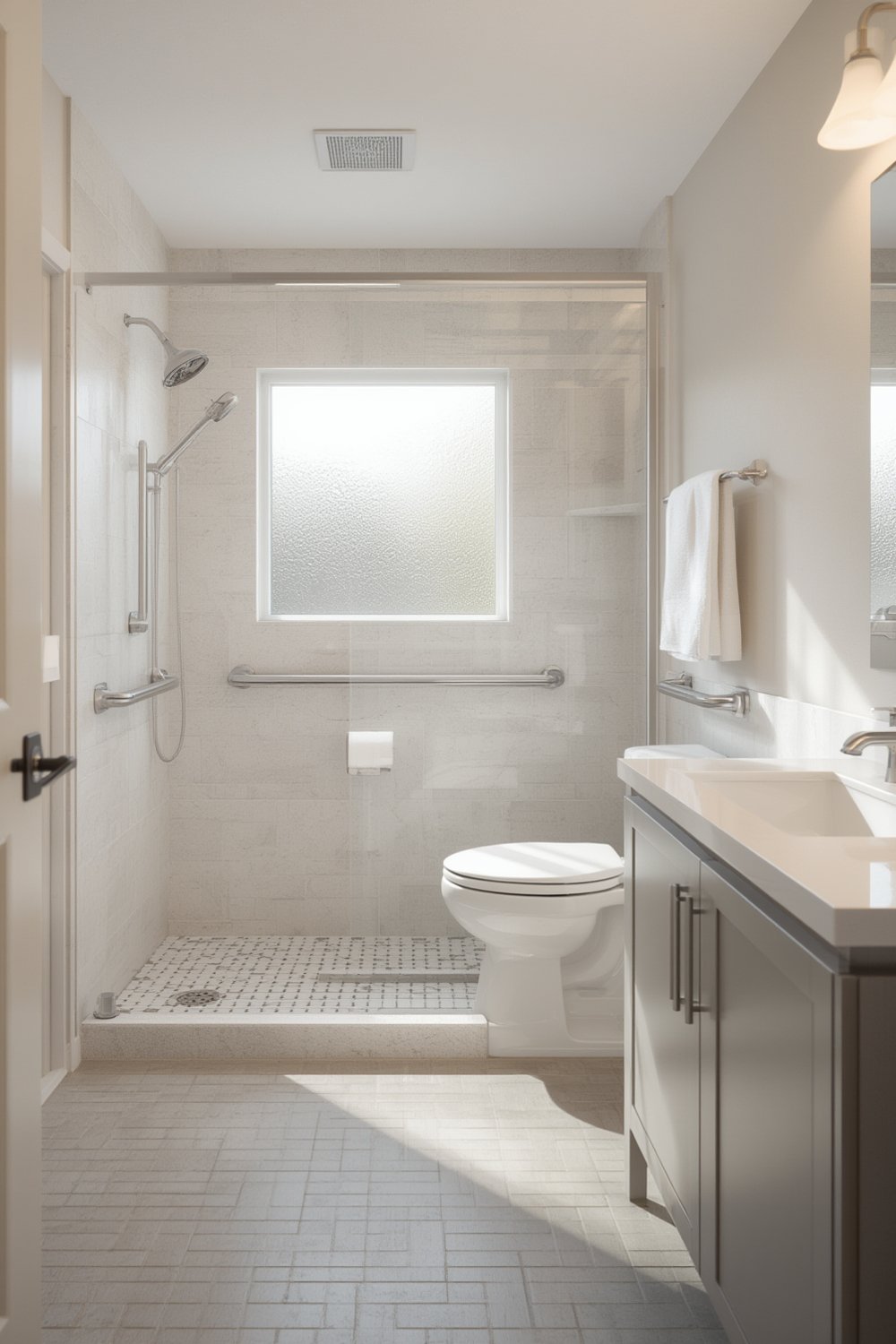
This is no fringe trend—investments are surging. Over 43% of adults 50+ plan to make home modifications for aging in place, and the market for such renovations is worth $74 billion as of 2024, set to top $113 billion by 2033 (AARP, AgingInPlace.com).
Why bathrooms? Over half of homes still lack basic grab bars, and only 7% have barrier-free shower entries (NIH study). Yet, well-executed bathroom upgrades result in less falls, less need for caregivers, and a strong return on investment when selling (source).
In short: the bathroom is a make-or-break room for long-term home livability—and financial sense.
Step-by-Step Guide: How To Create an Aging in Place Bathroom
Transforming a standard bathroom into an aging in place bath requires thoughtful planning and phased execution. Here’s how to succeed:
- Assess Current Risks and Needs
Walk through the bathroom at different times of day, noting hazards: slippery tubs, tight doorways, poor lighting, difficult faucets, or lack of sturdy support. - Install Sturdy Grab Bars
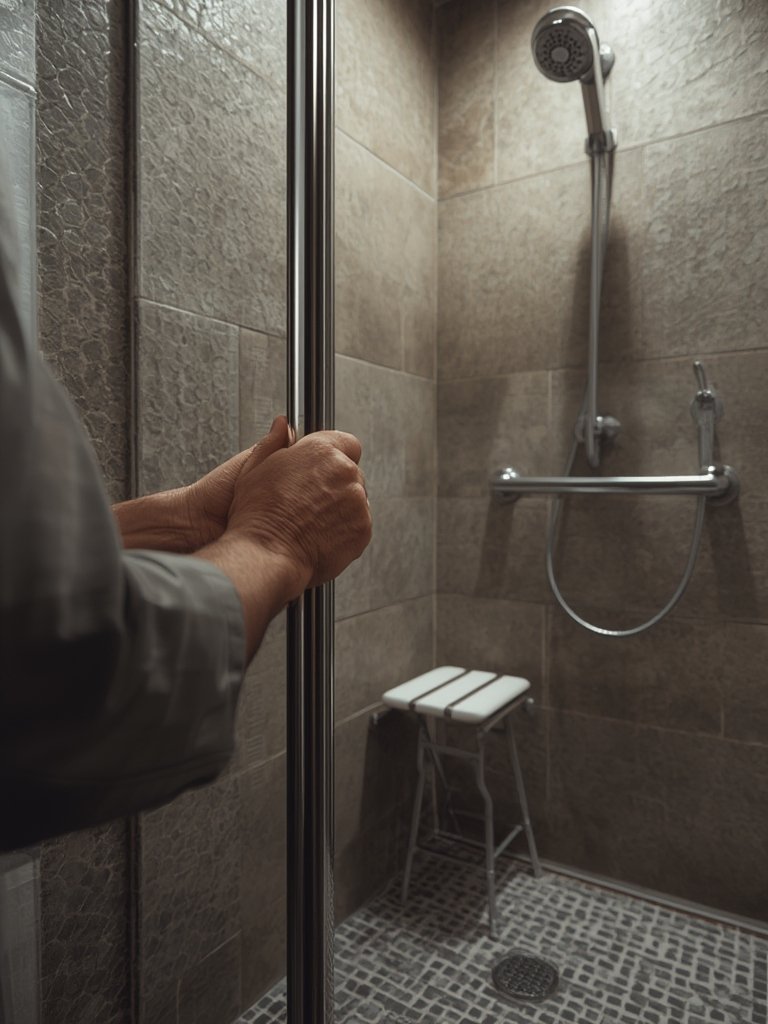
Place grab bars near toilets, inside showers, and along entryways. Grab bars should be professional-grade, anchored into wall studs, and located where hands naturally reach. This is step one for fall prevention. - Replace Standard Tubs with Barrier-Free Showers
A zero-threshold showers minimizes trip hazards. Incorporate a fixed shower seat or a sturdy shower bench and consider installing hand-held sprayers for easy access.
Upgrading to a walk-in shower is covered in more detail in our Complete Guide to Successful Bathroom and Kitchen Remodels. - Switch to Raised, Comfort-Height Toilets
Standard toilets are often low and hard to use—consider models 17–19 inches in height or add a secure riser attachment. Side grab bars are a must here, too. - Update Lighting and Controls
Install bright, motion-activated lights and clearly marked switches. Consider rocker light switches and lever faucet handles for arthritic hands. - Widen Doorways (If Needed)
Doorways should be a minimum of 32 inches for wheelchair access. Pocket or barn doors can save space and prevent accidental slams. - Add Non-Slip Flooring and Shower Surfaces
Use slip-resistant tile, luxury vinyl, or rubber flooring. In showers, add removable non-slip mats or permanent textured surfaces. - Choose Inclusive Aesthetics
Today’s universal design doesn’t mean industrial or clinical. Moen and Kohler now offer grab bars and shower features in marble, graphite, and designer metallics for a spa-like look (NewHomeSource). - Plan for Future Tech
Even if you skip smart toilets or electronic shower controls now, wire for extra outlets and WiFi so you can add them affordably later. - Get Professional Help When Needed
DIY is possible for basics—but tasks like curbless shower installation, doorway widening, or major plumbing should be handled by a licensed contractor. For tips on hiring pros, visit our Expert Guide to Home Repair Services.
Need design inspiration for your bathroom sanctuary? Explore biophilic bathroom design ideas for nature-inspired wellness updates that blend seamlessly with accessibility upgrades.
For modern zero-entry shower options, check our Curbless Shower Installation Guide for safe, stylish conversions.
Advanced Analysis & Common Pitfalls
Most aging in place bathroom projects fall short for a few simple reasons—some avoidable, some requiring honest compromises. Here’s what to watch out for:
- Underestimating Cost & Overruns
Mid-level bathroom upgrades can be expensive, and full gut remodels may reach six figures. Always demand a detailed, itemized estimate, recognizing there is often a broad range based on finishes and complexity (source). - Lack of Technical Planning
ADA-compliance is complex, including precise placement, space requirements, and maneuvering clearances. Make sure your pro is ADA-certified if your goal is full wheelchair accessibility. - Poor Aesthetics
Clinical or mismatched finishes “age” the room. Today, decorative grab bars, mood lighting, and custom tile can deliver both style and safety—see Moen and Kohler’s options (NewHomeSource). - Delaying Action
Falls often happen before upgrades are made. Don’t wait for an injury—start with simple additions like shower chairs or mats today. - Missing Out on Smart Tech
Few homes include voice-activated faucets, smart lighting, or emergency call systems—yet these are proven to help. Pre-wire or pre-plan for upgrades even if you hold off now. - Forgetting Future Flexibility
You might not need a wheelchair-accessible roll-in shower now, but planning with roll-under sinks or lever handles can prevent expensive future “redos.”
| Barrier | % of Homes Without Solution | Recommended Fix |
|---|---|---|
| No shower bars/seat | 64% | Install wall-anchored bars and bench |
| Standard toilet | 64% | Add riser-style or replacement raised toilets |
| Threshold/tub lip | 93% | Zero-curb/curbless shower conversion |
| Slippery tile | N/A | Slip-resistant flooring or adhesives |
| Narrow doorways | Most | Widen to 32 inches or use barn/pocket doors |
For an even broader home transformation, see how trendy home decor ideas can complement universal design strategies for all seasons.
Conclusion
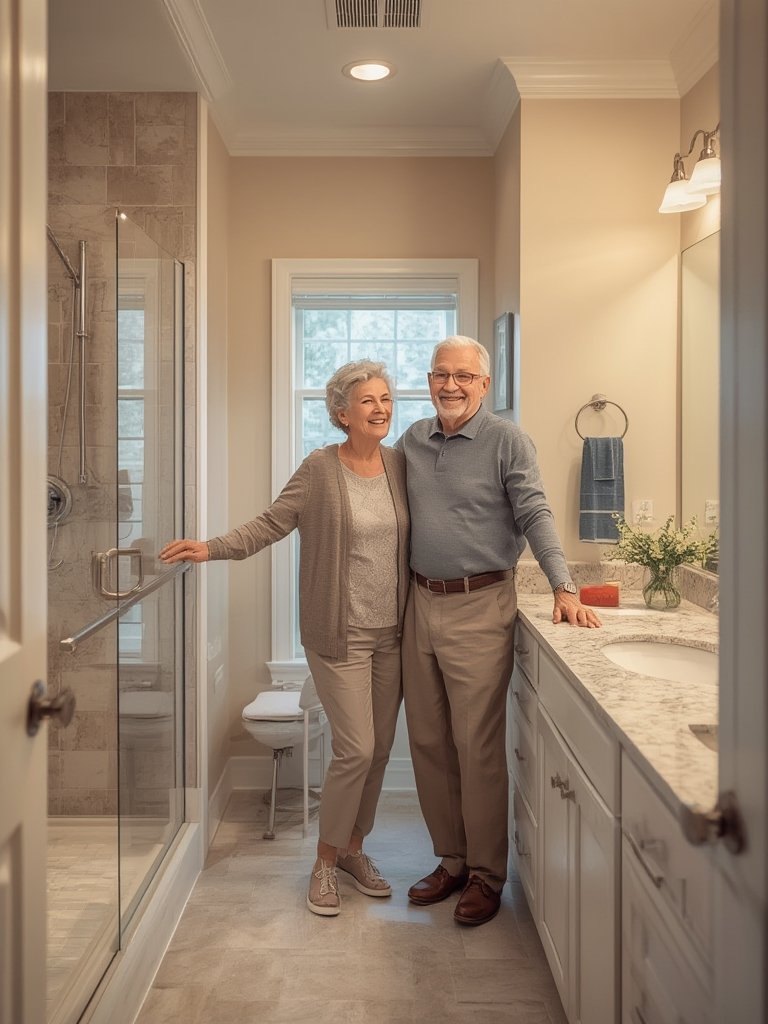
Upgrading to an aging in place bathroom protects independence, safety, and supports a solid ROI for homeowners wanting to remain put, according to national data. By planning now—before you absolutely need it—you can enjoy peace of mind and increased home worth.
Your next step: Book a consult with a certified aging in place specialist, or use this guide as a checklist to get started. Make your home better for years to come—and share this with loved ones who might benefit.
Want more bathroom renovation tips? Visit our Complete Guide to Successful Bathroom and Kitchen Remodels for step-by-step advice across all ages and abilities. For a local focus on exterior spaces, check our guide on Finding the Number 1 Landscaping Services Near You for Stunning Outdoor Spaces.
For a safer, more beautiful future at home, an aging in place bathroom is the best investment you might ever make. Start your transformation today.
FAQ
What is the most important aging in place bathroom modification?
Grab bars are widely considered the top upgrade for safety and fall prevention. Install them at the shower, tub, and toilet for instant peace of mind.
Can I remodel my bathroom for aging in place on a budget?
Yes, begin with affordable actions like non-slip mats, raised toilet seats, shower benches, and well-placed grab bars. These yield immediate benefits even before a full remodel.
How do I find contractors who specialize in aging in place remodeling?
Look for professionals certified by the National Association of Home Builders (NAHB) as Certified Aging-in-Place Specialists (CAPS). Always request references and a list of past accessible projects.
Does an aging in place bathroom add resale value?
Yes. Universal design bathroom remodels can boost resale value by up to 3% and return 68–70% of your investment, making them among the best upgrades according to national reports.
What features make a shower accessible?
A barrier-free (curbless) entry, built-in bench, grab bars, slip-resistant floors, and a hand-held shower head are essential for a truly accessible shower.