

### Blog Post:
Battery powered lawn equipment is changing the way homeowners care for their yards, offering a cleaner, quieter, and low-maintenance alternative to old-school gas models. But is it really the right move for everyone? This guide tackles real adoption stats, ownership costs, potential drawbacks, and actionable tips—without sugarcoating the real challenges.
Key Takeaways
- Battery powered lawn equipment has grown rapidly, making up over 30% of new residential sales in the US, but higher upfront costs remain a barrier.
- Environmental benefits are real—zero emissions, less noise, and low maintenance—yet questions linger over long-term reliability and battery replacement expenses.
- Major gaps exist in published reviews: true user complaints, five-year ownership costs, and head-to-head performance specs are rarely detailed.
- What Are Battery Powered Lawn Tools and Why Are They Winning?
- Step-by-Step Guide: Switching to Battery Tools
- Advanced Analysis & Common Pitfalls
- Conclusion
- FAQ: Battery Lawn Equipment
What Are Battery Powered Lawn Tools and Why Are They Winning?
Battery powered lawn equipment refers to yard tools—like mowers, string trimmers, and leaf blowers—that run on rechargeable lithium-ion batteries rather than gas engines. Thanks to tech advances and emissions regulations, these quiet, low-maintenance tools are on a meteoric rise.

The appeal is obvious: zero emissions, no gasoline hassle, and simpler upkeep. In 2024, sales of battery lawn mowers alone jumped 8%, with over 30% of new US lawn tool sales now electric—a massive leap from just 18% in 2020. Driven ahead by tighter EPA rules and dropping battery costs, cordless tools are poised to eclipse gas gear entirely. For instance, Home Depot expects over 85% of outdoor power tool sales to be battery based by 2028.
The main motivation? People value quieter mowing, no-smog operation, and the simplicity of charging over gassing up. If you’re exploring next-gen solutions, consider robotic lawn mowers or even rewilding lawn alternatives to cut your footprint further.
Step-by-Step Guide: Switching to Battery Tools
Making the switch to battery powered lawn equipment is straightforward, but planning ahead saves headaches. Here are practical steps:
- Assess Your Lawn and Tool Needs: Start by reviewing the size of your yard and the specific tools you use (mower, trimmer, blower). Battery models are best suited for small to medium suburban yards (up to half an acre in a single charge for most mowers).
- Set Your Budget: Battery models cost 25-50% more upfront than gas versions, so price out the total package, including extra batteries if you have a larger yard.
- Read Verified Reviews (When Available): Although there’s a lack of in-depth long-term complaints in published research, scour retailer sites or forums to spot real patterns in user feedback, such as run time, recharge times, or unexpected failures. If you want professional help choosing tools and other landscaping solutions, check out our guide to landscaping services near you.
- Understand Environmental Impacts: Battery gear eliminates local air pollution and lowers your neighborhood’s noise output. Choosing green equipment supports sustainability—especially when paired with drought-tolerant landscaping.
- Plan Recharge Logistics: Know your weekly mowing patterns and match battery runtime to your schedule. Keep a second charged battery if possible, especially for trimmers and blowers.
- Prep for Maintenance: While there’s no oil change or spark plug to worry about, battery checks, blade sharpening, and charger care are still essential. Store batteries inside during winter.
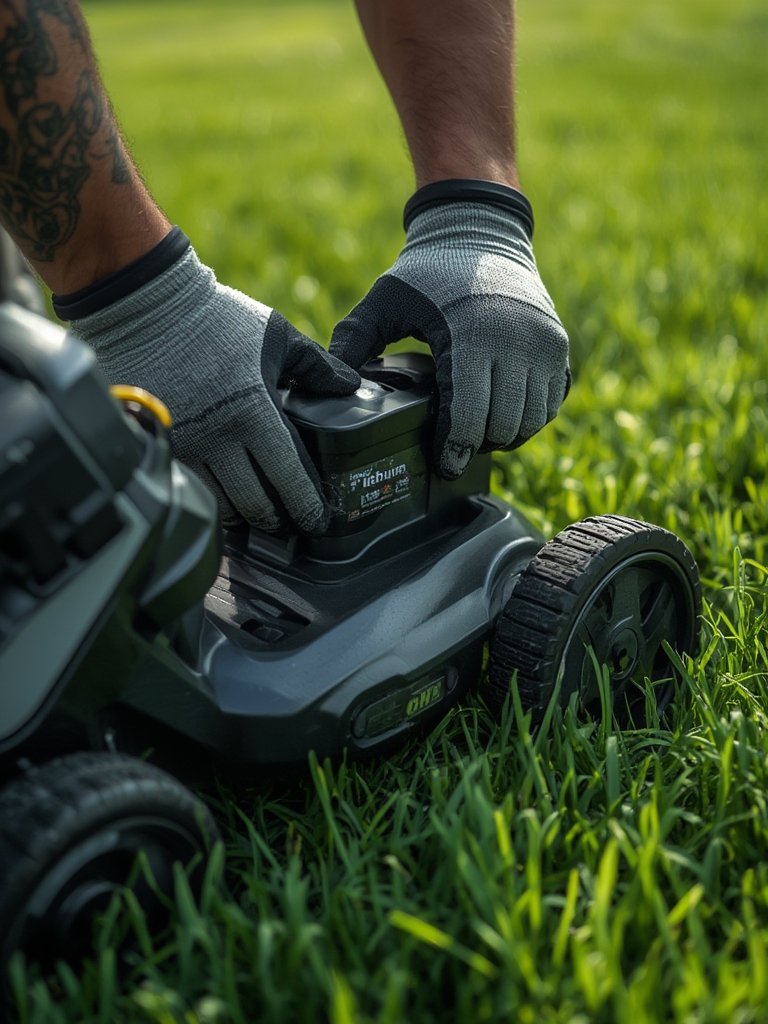
If noise is a concern—or you just want ultimate convenience—consider a fully autonomous yard: our robot mower guide has more ideas.
When tackling leaf cleanup, battery-powered blowers work for most driveways and patios, but heavy wet leaves or huge acreage still challenge even today’s best cordless models. For major properties or commercial work, some residential zero turn mowers still outperform cordless models in sheer power and runtime.
Once you’re geared up, build a regular care routine: remove the batteries after use, store them indoors, check for software updates on “smart” models, and clean tool decks to avoid grass buildup.
Advanced Analysis & Common Pitfalls
Going battery powered is tempting, but knowing the limitations helps prevent frustration. Here’s what the data—and missing data—shows:
- Upfront Cost Shock: Battery mowers cost 25-50% more than gas. The price gap is shrinking, but it’s still real, especially if you need extra batteries or higher-voltage models. (source)
- Long-Term Costs: While battery tools save on fuel and oil changes, the true five-year cost (including battery replacement cycles) is hard to pin down—few manufacturers publish real-world data. Many users recoup higher upfront costs over time, but only if battery packs last as claimed.
- Battery Life Realities: Most modern batteries handle 300-1000 full charge cycles, but heavy use or improper storage can degrade performance within 3-5 seasons. Replacement batteries still cost $100-$250 each.
- Power Output Shortfalls: Top battery mowers and blowers now match or exceed entry-level gas models, but on very tall, wet, or dense grass, runtimes and cutting quality can suffer.
- Limited Technical Data: There is still a glaring lack of independent testing that details side-by-side runtime, recharge speed, power stats, or lifespan for string trimmers and leaf blowers versus gas (as noted by Technavio).
- Environmental Gains (with Caveats): Battery tools cut smog-forming emissions, cut local noise, and skip oil/fuel mess. Still, battery manufacturing and recycling pose new environmental challenges. California, for example, estimated small gas engines created 15% of smog-forming emissions statewide (source), but the rise in battery disposal means responsible e-waste handling is critical.
- User Complaints Underreported: Reliable, verified user complaints and patterns of failure remain scarce in published research, making it hard to compare real-world reliability over five years or longer.
| Feature | Battery Powered | Gas Powered |
|---|---|---|
| Upfront Cost | 25-50% higher | Lower |
| Maintenance | Very low; no oil, no fuel | Routine (oil, spark plugs, fuel stabilizers) |
| Emissions | Zero in use | High; >30M tons CO2/year (US) |
| Noise Level | Low | High |
| Power / Runtime | Matching gas at mid-range; trailing at extreme demand | Longest runtime, peak power, rapid refuels |
| Battery Replacement | Likely in 3-5 years ($100-250) | N/A |
If minimizing your environmental impact is your top goal, pair battery gear with pollinator-friendly planting. Discover the best inspiration for every season or create bee-friendly spaces with native plants for pollinators.

Conclusion
Battery powered lawn equipment is now established, delivering cleaner, quieter yard care for millions of US homeowners. While upfront costs and some performance tradeoffs still challenge mass adoption, ongoing battery advances and pending regulations will keep driving change. Take time to compare brands, prepare for battery replacement cycles, and factor realistic runtime into your planning. With smart choices, battery powered lawn equipment can simplify your yardwork and boost your eco-credibility. Ready to transition? Research your needs, compare tools, and start making the swap today.
FAQ: Battery Lawn Equipment
What is the average lifespan of a battery for cordless lawn tools?
Most lithium-ion batteries last between 3 and 5 years or around 300-1000 charge cycles. Heavy use, extreme heat, or improper storage may shorten battery life.
Are battery powered lawn mowers powerful enough for thick or wet grass?
High-voltage battery mowers match or beat the power of many gas models on typical lawns. Wet or overgrown grass can drain batteries quickly, limiting effective runtime.
How does maintenance for battery tools compare to gas?
Battery tools require almost zero regular maintenance: no oil, fuel stabilizers, spark plugs, or carburetors—just blade sharpening, battery care, and cleaning.
Is there a long-term cost advantage to electric lawn tools?
Despite higher initial costs, most users save over time due to eliminating fuel and reduced maintenance—especially as battery prices fall. Factor battery replacement into your calculations.
Can the batteries be recycled?
Yes, but not in regular curbside bins. Take used batteries to authorized recycling centers or tool retailers for safe processing. Avoid throwing them away with household trash.